
SharePoint Became a Strategic Asset Nobody Knows How to Use
Twenty Years of Knowledge, Still Mostly Locked
SharePoint started as a document management platform. Over ten, fifteen, twenty years, it became something much larger: the repository for everything your organization knows. Policies, procedures, project files, meeting minutes, proposals, training content, customer deliverables, technical documentation – the accumulated intellectual property of years of work.
That content is extraordinarily valuable. The problem is that in its traditional form, it’s not accessible in the way AI requires – and honestly, it’s not always accessible in the way humans require either.
Document Management Was Designed for Humans, Not AI
Built to Help Humans Browse, Not AI Think
Traditional SharePoint governance – folder hierarchies, metadata schemas, content types, managed navigation — was designed for one thing: helping humans browse for files. It was never designed to make content accessible to AI systems. Keyword search returns results based on matching words, not understanding meaning. Metadata is inconsistently applied by busy contributors. The deeper structure and meaning within documents is invisible to the search algorithms. The result: an extraordinarily valuable knowledge asset that neither employees nor AI can fully use.
The Architecture That Makes SharePoint Actually Intelligent
The Transformation: From Repository to Intelligence Layer
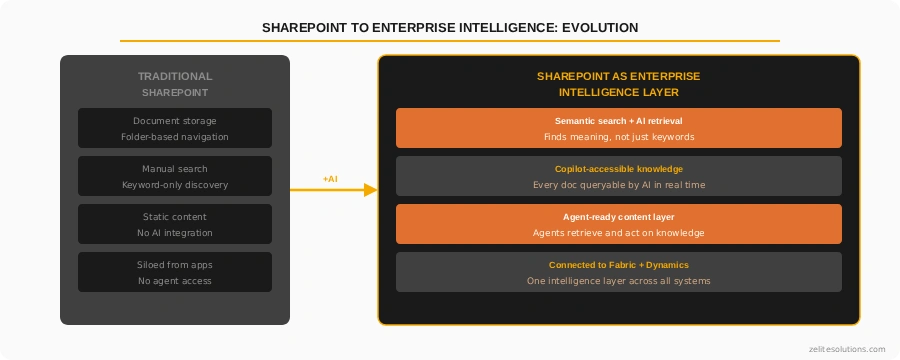
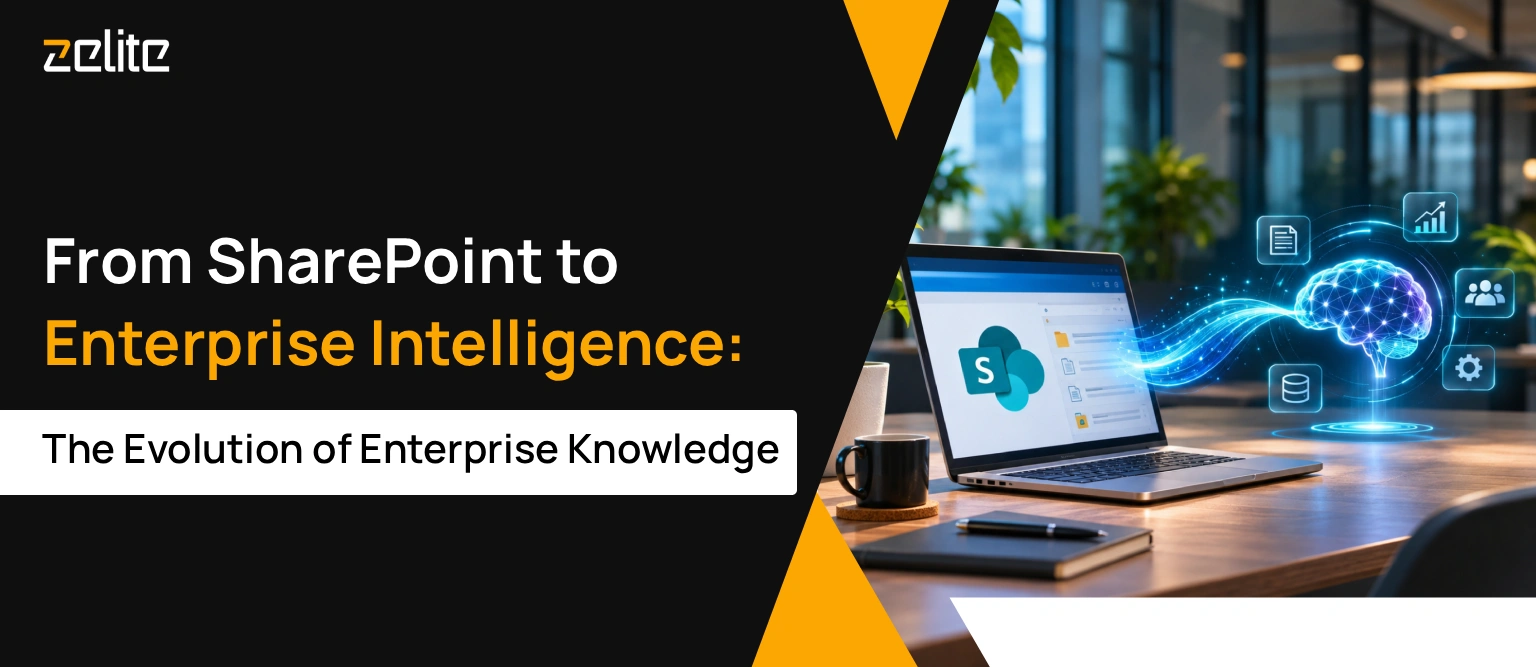
The architecture shows SharePoint’s transformation: from a folder-based document store with manual search to an AI-powered knowledge intelligence layer with semantic retrieval, Copilot integration, agent connectivity, and real-time knowledge access.
What the Transformation Actually Requires
What You Need to Build Above the Content Layer
The transformation requires five things: semantic indexing via Azure AI Search (which processes your content into something AI can reason about), Copilot integration for natural language query (so any employee can ask questions and get relevant answers), agent connectivity via Copilot Studio (so specialized agents can retrieve knowledge on demand), Fabric integration for combining documentary and operational data (so AI can reason across both), and governance via Microsoft Purview. The crucial insight: none of this requires migrating or reorganizing existing content. You add a processing layer above the content. The content stays where it is.
How Azure AI Search, SharePoint, and Copilot Work Together
How the Three Components Work Together
Azure AI Search sits between SharePoint and Copilot — indexing SharePoint content semantically so Copilot can retrieve what’s most relevant for any query. This is the piece most organizations haven’t built yet, and it’s where the intelligence transformation actually happens. Copilot Studio agents can access the indexed knowledge layer to answer function-specific questions: the latest pricing policy, the relevant project precedent, the current compliance guidance. Purview ensures access respects sensitivity classifications and permissions – so AI doesn’t surface content to people who shouldn’t see it.
The Value That Was Always There – Now Accessible
What Opens Up When the Knowledge Becomes Accessible
- Decades of accumulated institutional knowledge become searchable through natural conversation
- Subject matter expertise becomes enterprise-accessible rather than locked with individual experts
- Customer-facing teams access the full depth of organizational knowledge in client interactions
- Compliance teams have instant access to the most current policies and regulatory guidance
- New initiatives benefit from every relevant precedent automatically surfaced from past work
What We’ve Seen Work Across Industries
The Pattern That Works Across Industries
We’ve delivered SharePoint intelligence architecture for clients in manufacturing, professional services, financial services, and technology. The pattern that works is consistent: activate the semantic layer above existing content, connect Copilot and custom agents to it, govern with Purview. What surprises clients most is how little cleanup is required upfront. The AI layer handles a lot of the organizational messiness that SharePoint governance projects spend months trying to fix manually. You might still want to tidy things up eventually – but you don’t need to before the AI can start working.
The most valuable knowledge asset in most organizations is already in SharePoint. The question isn’t whether to build it – it’s whether to access what’s already there.
Your Existing SharePoint Is Worth More Than You Think
The Knowledge Is Already There
Zelite can assess your SharePoint environment, design the AI activation plan, and deploy the architecture that makes your existing content genuinely useful – without a massive cleanup project first