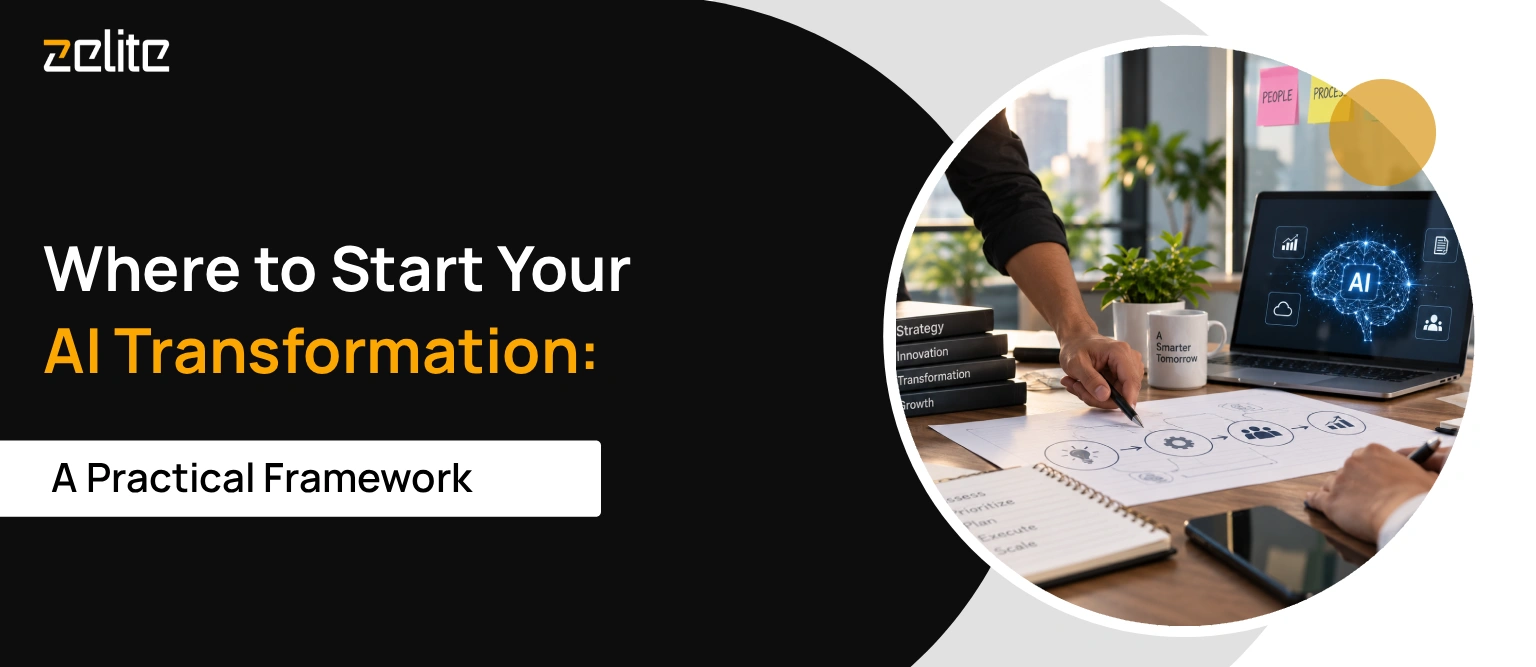

The Question Nobody Asks First
Most Leaders Ask the Wrong First Question
Here’s the conversation we have more than any other: a CTO or CDO walks in, ready to invest seriously in AI, and opens with, “So which tools should we buy?” It’s understandable. Tools are tangible. But it’s the wrong question — and the vendors rushing to answer it are doing those leaders a disservice.
The right first question is: “Where are we, and what does our starting point actually require?” AI transformation is a journey — one with stages that compound on each other. Where you start determines what’s possible.
What Skipping the Foundation Costs You
Buying Tools Without Knowing Your Starting Point
We’ve seen this pattern more times than we can count. An organization skips the readiness work, buys strong tools, and deploys them on a data foundation that wasn’t ready. The models produce outputs nobody trusts. Governance gaps cause a compliance incident. Adoption stalls because nobody trained for change. Six months later, the AI budget is under scrutiny and the team is demoralized. None of that was inevitable — it was skippable.
A Framework That Actually Sequences the Work
Sequence the Journey, Don’t Skip Ahead
The Five Stages — and Why Order Matters
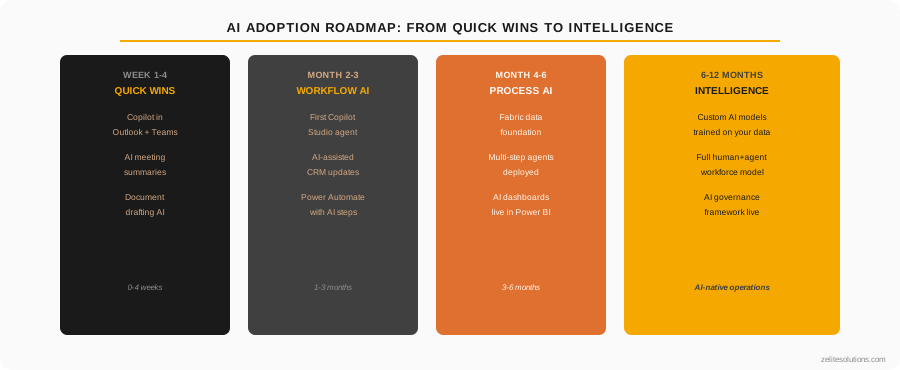
The AI transformation journey moves through five stages: Assess (understand readiness across data, knowledge, technology, governance, and people), Strategise (define outcomes, select platforms, design governance), Pilot (deploy your top 3 use cases and measure real outcomes, not demos), Scale (build the platform, expand the agent portfolio, validate the ROI you promised), and Intelligence (proprietary IP, AI-native workflows, and advantages competitors can’t replicate from a vendor catalog).
The temptation to skip from Assess straight to Scale is real — especially when a board is asking for results. But every shortcut here creates technical debt you pay back later, expensively. The organizations that succeed treat this as a sequenced build, not a sprint.
Where Microsoft Fits the Journey
Microsoft’s Underused Potential at Each Stage
Here’s what most Microsoft customers don’t realize: they already own much of what they need for this journey. Copilot for early productivity wins. Fabric for building the data foundation. Copilot Studio for piloting custom agents. Dynamics 365 for embedding AI into operational workflows. Azure AI Foundry for building the proprietary intelligence that nobody else can buy off the shelf. The architecture is coherent — most organizations just haven’t connected it intentionally.
What Each Stage Earns You
What You Walk Away With After Each Stage
- Stage 1 (Assess): organizational clarity about where to invest and what to prioritize
- Stage 2 (Strategise): aligned leadership, governance framework, and investment roadmap
- Stage 3 (Pilot): validated use cases, measured outcomes, and organizational confidence
- Stage 4 (Scale): platform maturity, agent portfolio, and compounding intelligence
- Stage 5 (Intelligence): proprietary advantage that competitors cannot easily replicate
What We’ve Learned Starting Hundreds of Conversations
Honest Advice: Start With Where You Are
Here’s what we tell every new client: we don’t sell tools. We sell a journey — and the first thing we do is figure out where you actually are on it. Not where you think you are, and not where you’d like to be. We run a structured readiness assessment across five dimensions: data, knowledge, technology, governance, and people. The output isn’t a report that sits on a shelf — it’s a sequenced investment roadmap tied to real business outcomes. You might be wondering if you need to do all five stages. The answer: not necessarily all at once, but you do need to know which stage you’re on.
The pushback we hear most often is: “We’ve already started — can’t you just help us move faster?” Absolutely. But we still run the assessment. Because most organizations that think they’re at Stage 3 are actually operating at Stage 1 in half their dimensions — and knowing that changes everything.
Not Sure Where to Begin?
Find Out Where You Actually Stand
Our AI Readiness Assessment takes 2–4 weeks and gives you a clear, honest picture of where you stand, what’s blocking you, and what to invest in first. If you have an AI budget conversation coming up, this is what should inform it.